Pipesim 2026 Now Available
Thursday, 11 December 2025
The Pipesim™ steady-state multiphase flow simulator is the flagship SLB well and network modeling software for steady-state multiphase flow simulation. Together with the Olga™ dynamic multiphase flow simulator, SLB provides a complete software solution for design and optimization of production systems.
These notes accompany the release of Pipesim 2026.1. The notes describe changes in Pipesim 2026.1 relative to Pipesim 2025.2. This document should be read by all users of the program. The complete program documentation consists of Pipesim simulator help, release notes, and installation guides.
The SLB Software Support Hub provides useful information about the product and a knowledge base.
Please contact SLB if problems or missing functionality are encountered when using Pipesim steady-state multiphase flow simulator or any of its related software tools.
Enhancements in Pipesim 2026.1
10-dimensional multi-test well mode calibration
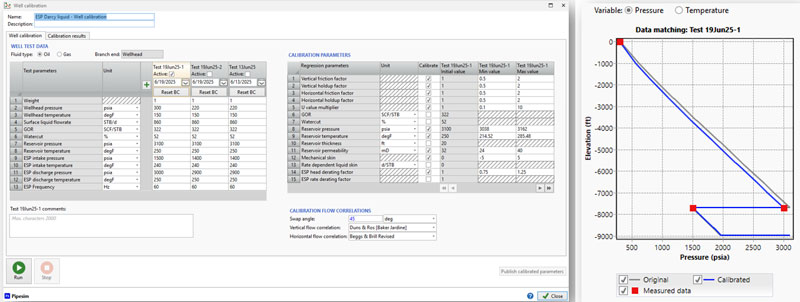
Pipesim 2026.1 comes with a new multi-test well calibration task. The optimization algorithm tunes up to 10 calibration parameters simultaneously to match measured well test conditions. This includes:
Unlike the existing data-matching task, which involves adding the well test data into the catalogue and then importing a single test into the task, the new approach allows for direct entry of multiple well test data sets into the calibration workflow, and assigning a weighting factor to the test in case multiple tests are included in the calibration.
Advanced well sensitivity analysis
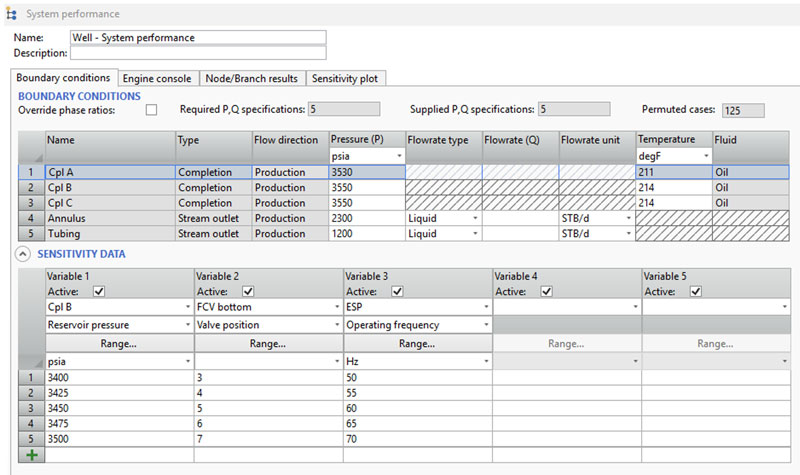
The new sensitivity analysis workflow for the advanced well is designed to improve the user experience by enabling parametric analysis through the permutation of up to five variables. It generates a matrix of independently solved cases, which are then combined and visualized to deliver a quick and intuitive assessment for identifying optimal operating conditions.
Branch rate constraint
The rate constraint feature for the network simulation task has been extended to support intermediate branches. Previously, constraints could be set only for the terminal branches that have source/sink/well. Branches that have flowrate constraints defined must contain one or more chokes. When the network solves, the constraint is met by adjusting the bean size of the choke.
Counter flow temperature correction
To consider the effect of heat exchange between production and gas lift injection fluids at the well head zone, a new temperature correction option has been added to gas-lift injection well system. Based on user selection, the temperature can be corrected at the well head or along the tubing from the specified depth.
Upgrade to Multiflash 7.6
Pipesim 2026.1 comes with Multiflash 7.6 installed by default. For more information, refer to the Multiflash user interface.
PythonToolkit improvements
The following enhancements are available in Pipesim 2026.1 for the PythonToolkit:


