Petrel™ automated well placement plug-in now available for Petrel subsurface software
Wednesday, 30 September 2026
The Petrel™ automated well placement plug-in enables reservoir engineers to identify, design, and evaluate infill well opportunities under subsurface uncertainty. The plug-in integrates opportunity mapping, engineering constraints, automated trajectory generation, customized completion generation, simulation-case setup, and probabilistic production assessment within a unified Petrel workflow.
The Petrel automated well placement plug-in is designed to function with Petrel 2024.1 or higher.
The guided, well placement workflow connects reservoir opportunity analysis with technically feasible well design and simulation-based evaluation. Engineers can generate and compare alternative development concepts while retaining visibility of the geological, engineering, completion, and operating assumptions used in each scenario.
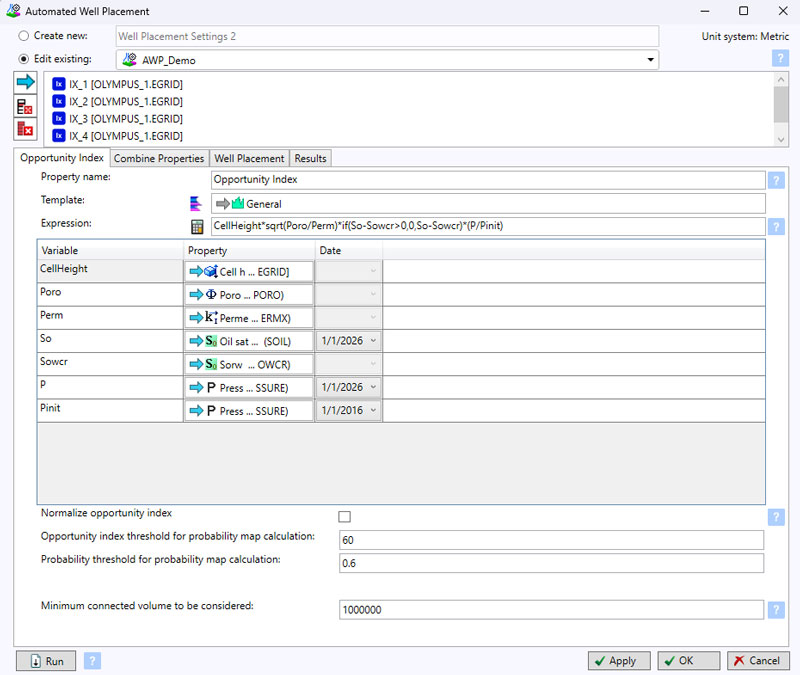
Figure 1. The plug-in interface offers step-by-step guidance for well placement inputs.
Probabilistic opportunity identification: generate opportunity index and probability maps from deterministic reservoir simulation models or ensemble of realizations to identify target areas while preserving the relationship between individual realizations and the aggregated uncertainty result.
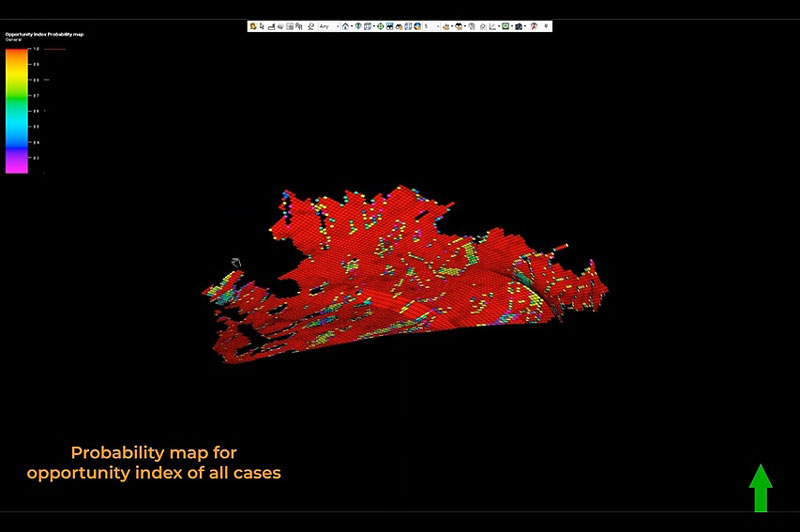
Figure 2. Probability-based opportunity analysis generated from multiple reservoir realizations.
Constraint-base well placement and trajectory design: generate explicit three-dimensional well trajectories while honoring selected drilling centers, existing wells, spacing rules, development patterns, surface constraints, and trajectory limits.
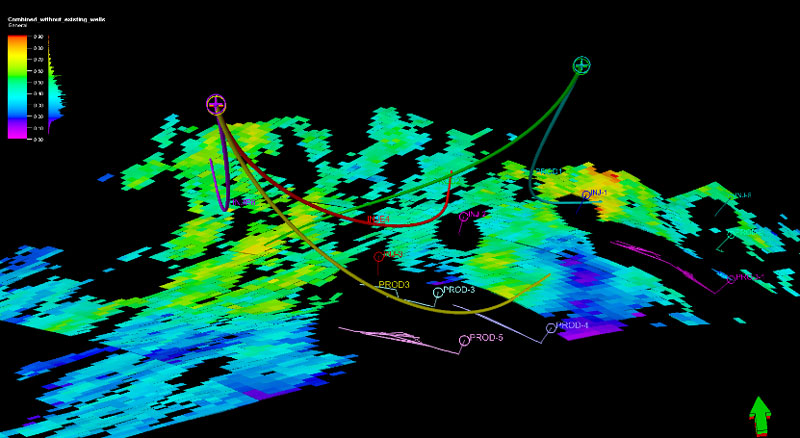
Figure 3. Automatically generated well trajectories honoring engineering and operational constraints.
Customized completion generation: create casing and perforation configurations as part of case construction. Perforations can be restricted to target or intersected flow units and filtered using selected properties, surfaces, or depth criteria.
Simulation-case generation: create simulation-ready development scenarios containing generated wells, completion intervals, schedules, and operating controls for subsequent production evaluation..
Probabilistic production assessment: compare generated development alternatives across multiple realizations using production distributions and percentile-based results to support uncertainty-aware ranking.
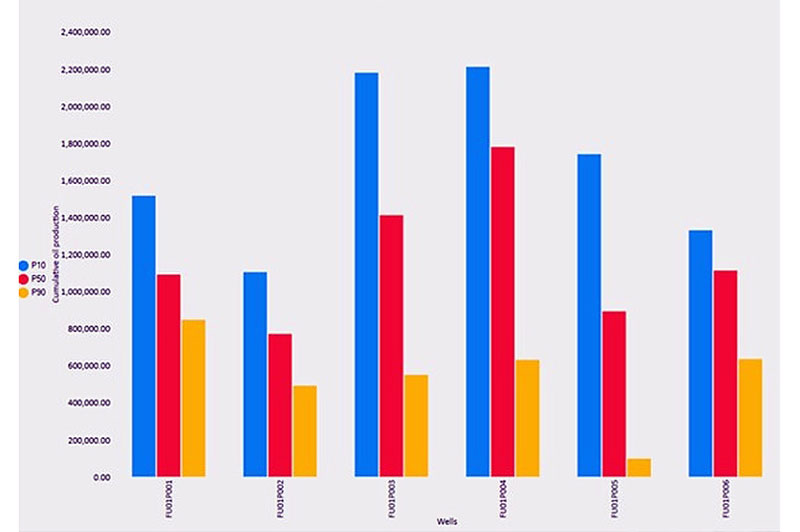
Figure 4. Probabilistic production assessment comparing candidate wells.
Native Petrel software workflow: store generated wells, trajectories, completions, properties, and simulation cases as Petrel software project objects so that engineers can inspect, refine, and reuse the workflow outputs.
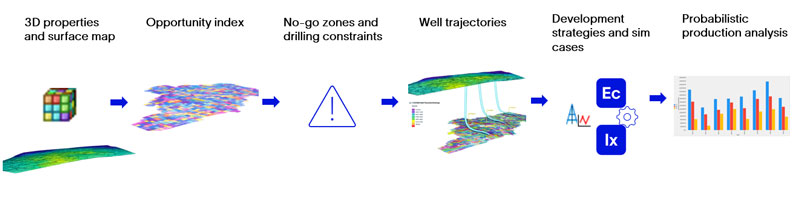
Figure 5. End-to-end well placement workflow in Petrel software
Visit Petrel subsurface software for additional product information.


